Introduction to Earth's Mystical Menagerie
From the outlandish tales of mermaids to the whimsical descriptions of the flying fish, our world is sprinkled with creatures so bizarre they could only be real... right? Well, let's dive into the myths and facts of some truly peculiar creatures that walk, swim, and waddle across our planet: the platypus and the narwhal.
The Platypus: Nature's Frankenstein?
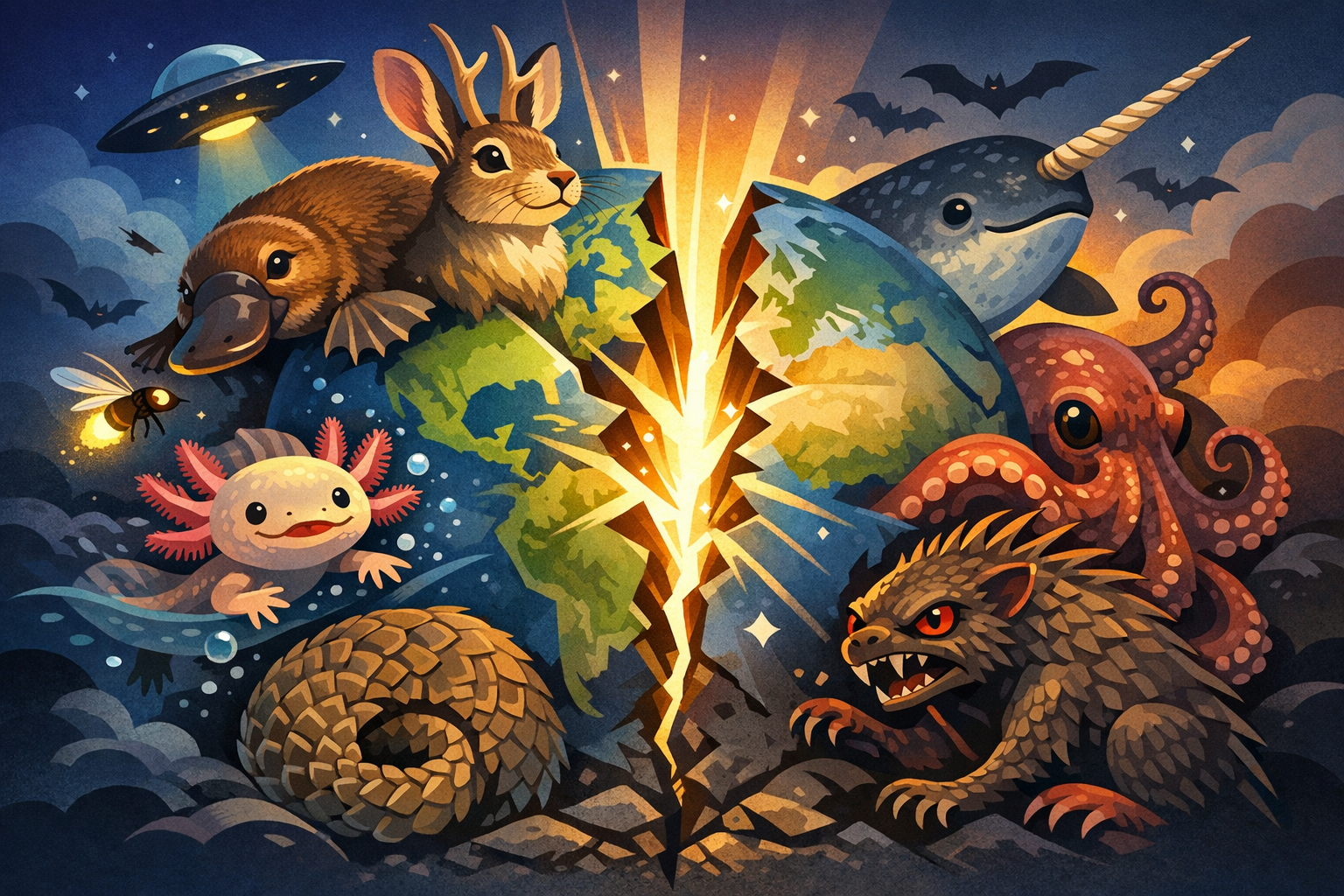
Imagine a creature with the bill of a duck, the body of an otter, the feet of a beaver, and that lays eggs. Enter: the platypus. When British scientists first encountered this Australian enigma in the 18th century, they thought they were victims of an elaborate hoax. But what’s the truth behind this seemingly mythical creature?
Fact vs. Fiction: Platypus Fantasies
- Fact: Platypuses are one of the few venomous mammals. The males have spurs on their hind legs that deliver venom capable of causing severe pain to humans. - Fiction: While their parts might seem stitched together, the platypus is a perfectly natural creature, not a mad scientist’s concoction. - Fact: They lay eggs! The female platypus lays about one to three eggs and nurtures them until they hatch. - Fiction: Despite their beak-like snout, platypuses are not related to birds. They are monotremes, a branch of mammals that lay eggs.
The platypus is a living testament to the diversity of evolution, blurring the lines between what we think we know about mammals.
Narwhals: The Unicorns of the Sea
As the saying goes, “seeing is believing,” but the narwhal, often dubbed the ‘unicorn of the sea,’ challenges that notion. With its spiraled tusk reaching up to 10 feet, it’s easy to see why narwhals inspired nautical legends.
Fact vs. Fiction: Narwhal Narratives
- Fact: The narwhal's tusk is actually an elongated tooth, usually found in males, although some females may also sport these majestic spirals. - Fiction: Contrary to old tales, narwhals are not mythical creatures but real and very much alive in the icy waters of the Arctic. - Fact: They use their tusks for various sensory purposes, like detecting changes in their environment, not for jousting like medieval knights. - Fiction: While they might seem solitary due to their remote habitat, narwhals are social creatures, often found in pods.
Narwhals remain a symbol of mystery and wonder, proving that our oceans still hold secrets yet to be fully uncovered.
Conclusion: Celebrating Our World’s Natural Wonders
Whether it’s the bizarre bill of a platypus or the enchanting tusk of a narwhal, these creatures remind us of nature’s unending creativity. In a world where fact can be stranger than fiction, the peculiarities of these animals enrich our understanding and appreciation of the natural world. So next time you hear a tale of mythical beasts, remember: some of them might just be waiting to be discovered in the wild!