The Sweet Beginnings of Chocolate
Chocolate, in its earliest form, was far from the sweet treat we know today. Originating from the Mesoamerican civilizations, it was consumed as a bitter fermented beverage mixed with spices or wine. The Mayans and Aztecs revered it as a sacred drink, often using it in religious rituals and considering it a gift from the gods.
Chocolate’s Journey to Europe
When Spanish explorers introduced chocolate to Europe in the 16th century, it quickly captivated the continent’s elite with its exotic allure. As sugar was gradually added, chocolate transformed into a delightful indulgence, though it remained a luxury item for the wealthy due to its expensive ingredients.
From Royal Courts to Valentine Traditions
The connection between chocolate and romance can be traced back to royalty. In the 17th century, chocolate was often given as a gift among European aristocrats, sometimes with amorous intentions. Its association with love and passion slowly flourished in these courtly settings.
Enter Richard Cadbury
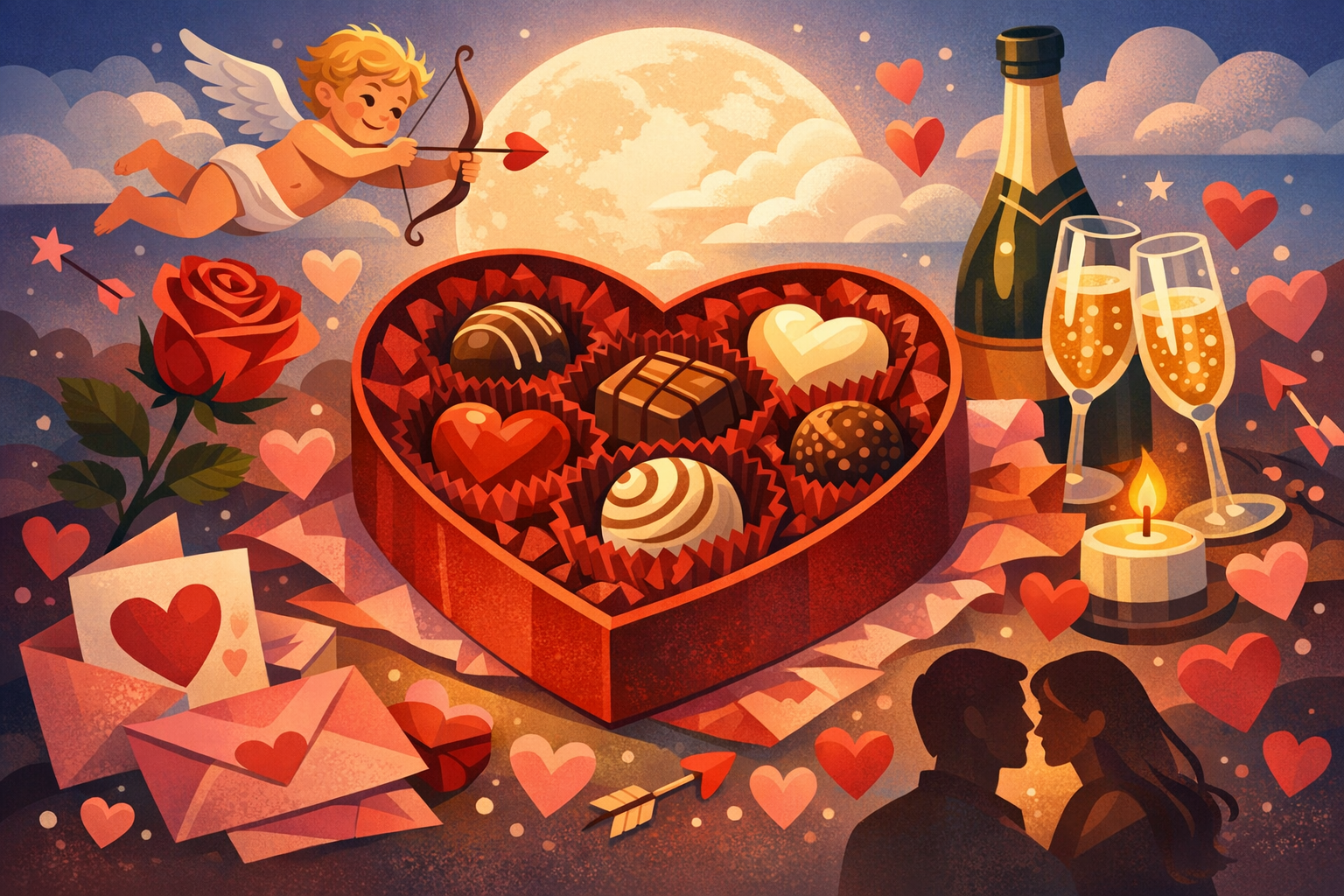
Fast forward to the 19th century, when Richard Cadbury, a member of the renowned chocolate-making family, had a stroke of marketing genius. In 1861, he crafted the first heart-shaped box of chocolates for Valentine’s Day, adorned with cupid and rosebuds. These boxes served a dual purpose: to hold the delectable treats and to be kept as cherished mementos.
Marketing Magic: The Rise of Chocolate for Lovers
The commercialization of Valentine’s Day during the Victorian era provided the perfect backdrop for chocolate’s romantic ascent. As the holiday evolved, chocolate became more accessible to the masses, thanks in part to advancements in chocolate production and the burgeoning middle class.
Chocolate Brands Seize the Day
Cadbury was not alone in recognizing the potential of chocolate as the ultimate token of affection. Companies like Hershey’s and Mars jumped on the bandwagon, crafting their own Valentine’s offerings. The iconic heart-shaped box became a staple and a symbol of love by the early 20th century.
Chocolate Myths and the Science of Love
Chocolate’s allure is not only due to clever marketing. It’s also steeped in myths and scientific intrigue. Many believe chocolate acts as an aphrodisiac, thanks to compounds like phenylethylamine and serotonin, which are linked to feelings of happiness and love. Although scientific consensus on its aphrodisiac qualities is mixed, the romantic narrative persists.
A Gift that Keeps on Giving
Regardless of its scientific standing, chocolate’s role as a Valentine’s mainstay is firmly established. Its rich history, combined with cultural and emotional significance, ensures it remains a beloved symbol of love. So next time you savor a piece of chocolate on Valentine’s Day, remember the centuries of tradition and marketing that have made it the universal emblem of affection it is today.